Project Type
In‑House
For
Microsoft WXC
Year
2021-2022
At the time, bringing grocery savings and coupons into the Microsoft Shopping ecosystem was new territory. Historically, most savings lived at the site or brand level, not down at the local grocery aisle where prices and promos constantly shift. Price-conscious shoppers were already trained on a simple mental model: type in your phone number at checkout, and any clipped or eligible savings just apply. That was our real competition—the effortless feeling of “I enter my number and it just works.”
Online, the reality was far messier. Deals varied by store and changed frequently, coupon partners all had slightly different rules, and our data didn’t always arrive in neat, predictable formats. Users had to hunt for offers, guess what would still be valid when they shopped, and do the mental math of which savings would actually apply at their local store. On top of that, we were asking them to link a store rewards account and “clip” offers in advance. Those constraints and tradeoffs from partners, data quality, shifting promotional windows, and the extra step of account linking directly shaped what we could promise in the UI, and how much people would ultimately trust those promises.
My goal in this work was to design a clearer, more unified savings journey that felt both valuable and believable. I wanted people to see relevant deals where they already were, understand at a glance what would apply to them, and feel confident that linking a store rewards account and clipping offers was worth the effort.
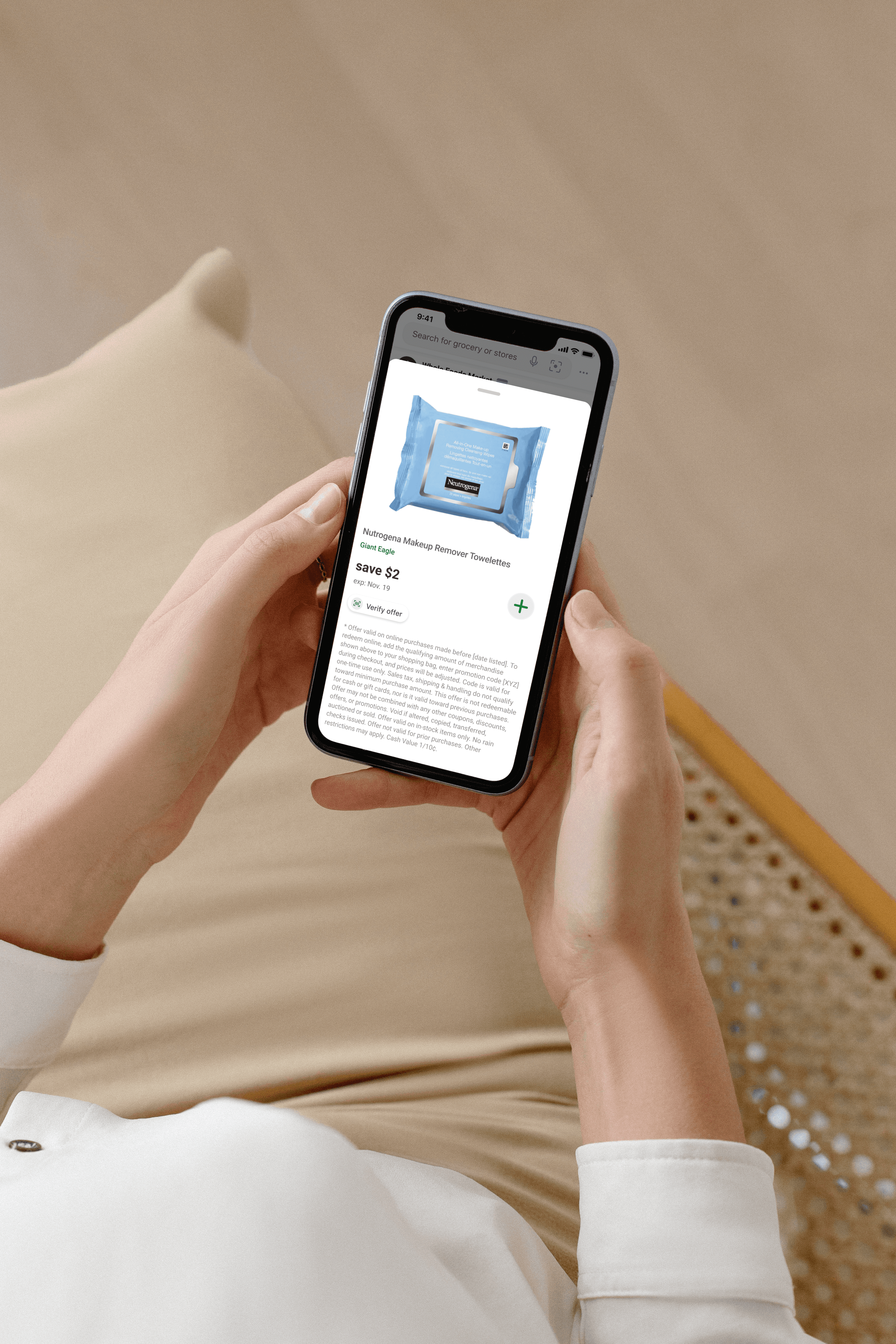
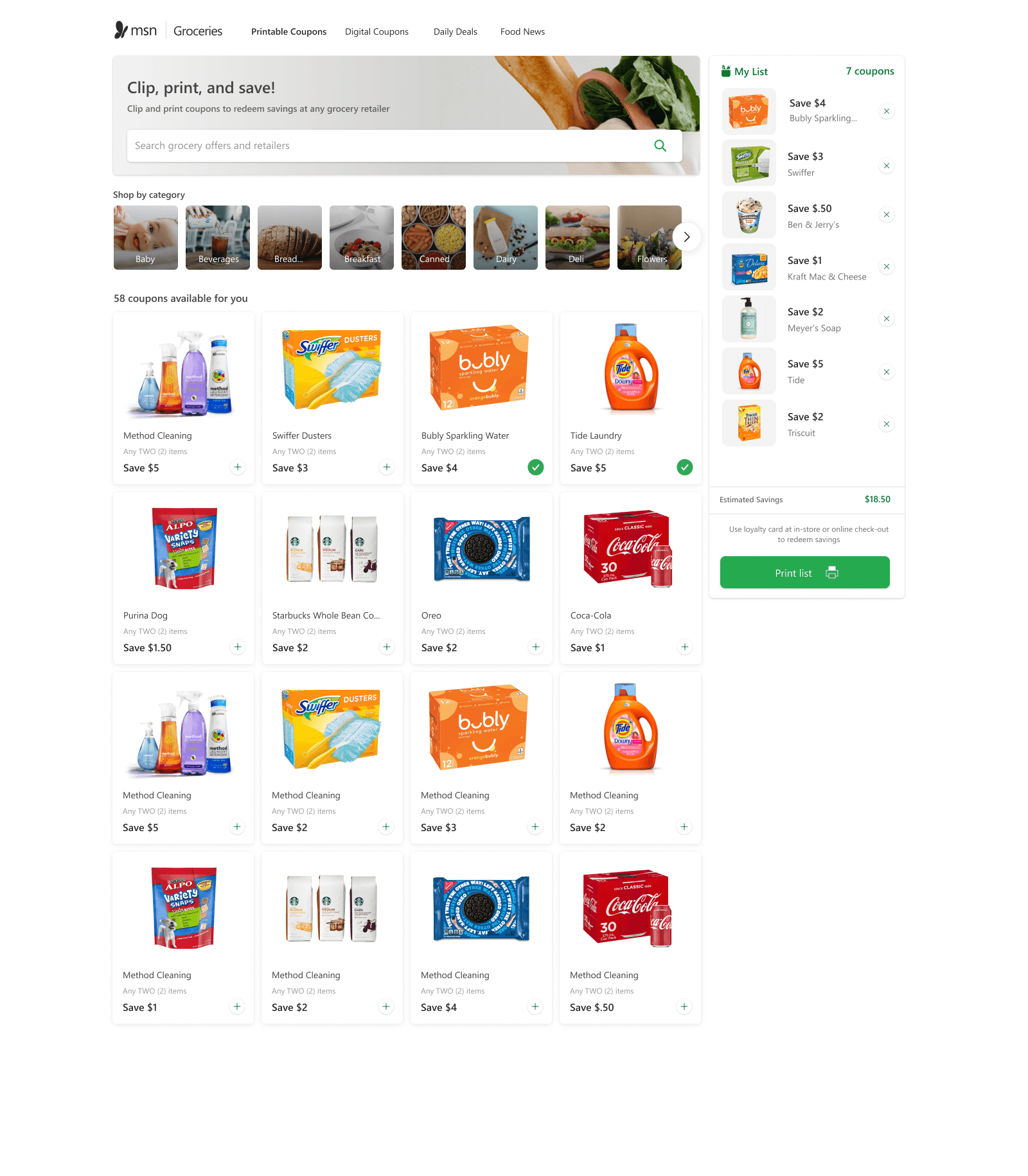
To ground this, I led the product design process across research, UX, and delivery. I conducted user research and market analysis to understand how people currently discover and use grocery deals, and where they felt overwhelmed or misled. From there, I created prototypes exploring different ways to surface offers, explain requirements (like reward account linking), and simplify the clipping flow while remaining compliant with partner and data constraints. Through iterative usability testing, I identified friction points that could undermine trust—confusing eligibility rules, unclear states for “clipped” versus “applied,” or mismatches between what users saw in our UI and what they expected in-store—and refined the experience to reduce those gaps.
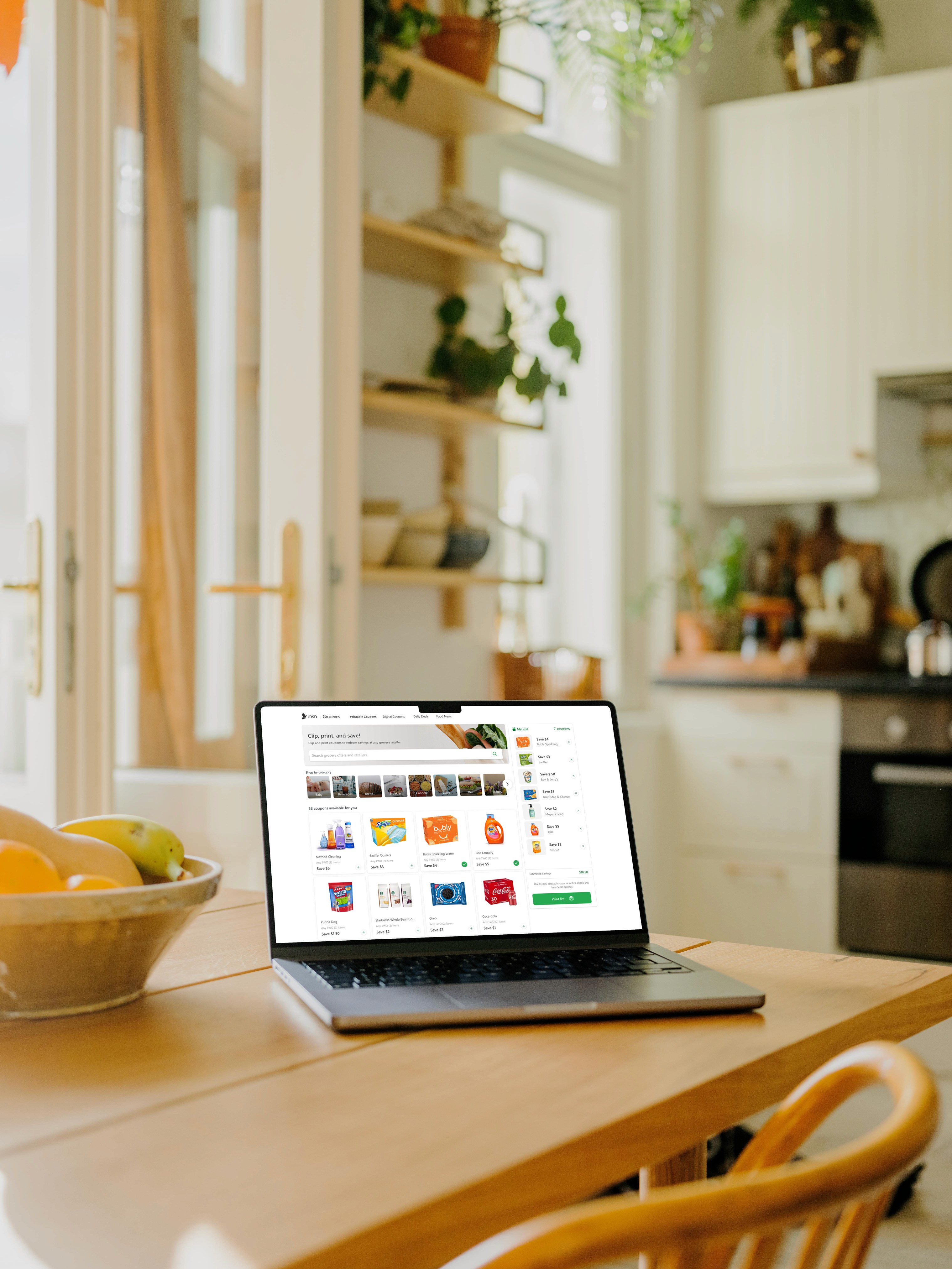
Throughout the project, I worked closely with product managers and engineers to balance user needs with technical and business realities. Together we made intentional design tradeoffs: simplifying how we presented complex coupon and data logic, prioritizing clarity over maximum exposure of offers, and ensuring the end-to-end experience—from discovery to clipping to checkout—felt coherent and reliable. This work culminated in a cohesive product launch for Microsoft Groceries and Start Shopping Deals, designed to help users save money in a way that felt straightforward, respectful of their time, and support a smooth grocery trip experience.
Product Launch · UX Design · Technology Constraints
Next Project